Inside EVO Properties’ Leasing Strategy: How 3D Visualisation Supports Tenant Decisions at Oslo and London
Dec 17, 2025

Georgiana Floroiu
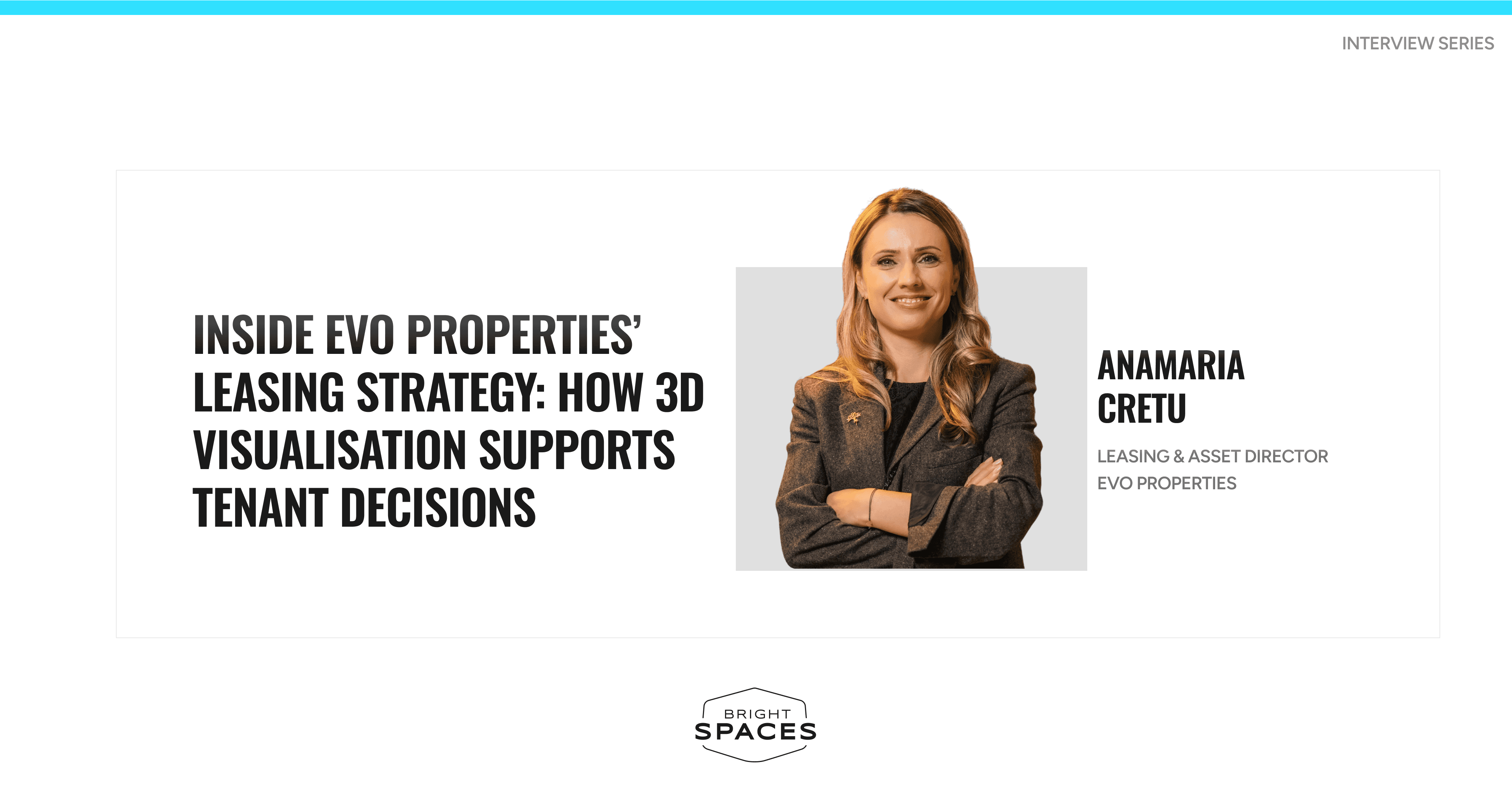
As the office market continues to evolve, developers and landlords are increasingly turning to technology to create clarity, reduce friction, and support tenants in making faster, more confident leasing decisions. EVO Properties, the owner of the Class A+ Oslo and London office buildings in Bucharest, is among the companies embracing this shift.
We sat down with Anamaria Cretu, EVO Properties’ Leasing and Asset Director, to discuss their experience using Bright Spaces’ 3D Masterplan and Intelligent 3D Space Planning solutions, how tenant expectations have changed, and what it takes to differentiate in a competitive leasing market.
What were the initial leasing challenges you were dealing with when you joined the EVO Properties team?
When I joined the team, the main challenge wasn’t the buildings themselves, which are modern, high-quality assets, but rather the perception of the area at that time. Last year, one of our priorities was to clearly articulate the potential of the area and the long-term vision behind the London and Oslo office buildings.
At the same time, many prospective tenants were approaching the leasing process without a real estate background. They were looking for clarity, guidance, and visual tools that could help them better understand how their future office space could take shape.
Why did you decide to work with Bright Spaces?
We chose to work with Bright Spaces because we believe it adds real value to our leasing strategy. From experience, I knew how effective this type of visual support can be in helping tenants better understand a space by providing clarity and structure throughout the leasing process.
The collaboration is reviewed annually, and this is a conscious decision, based on impact and results, rather than routine.
How does the 3D Masterplan help you in day-to-day leasing conversations?
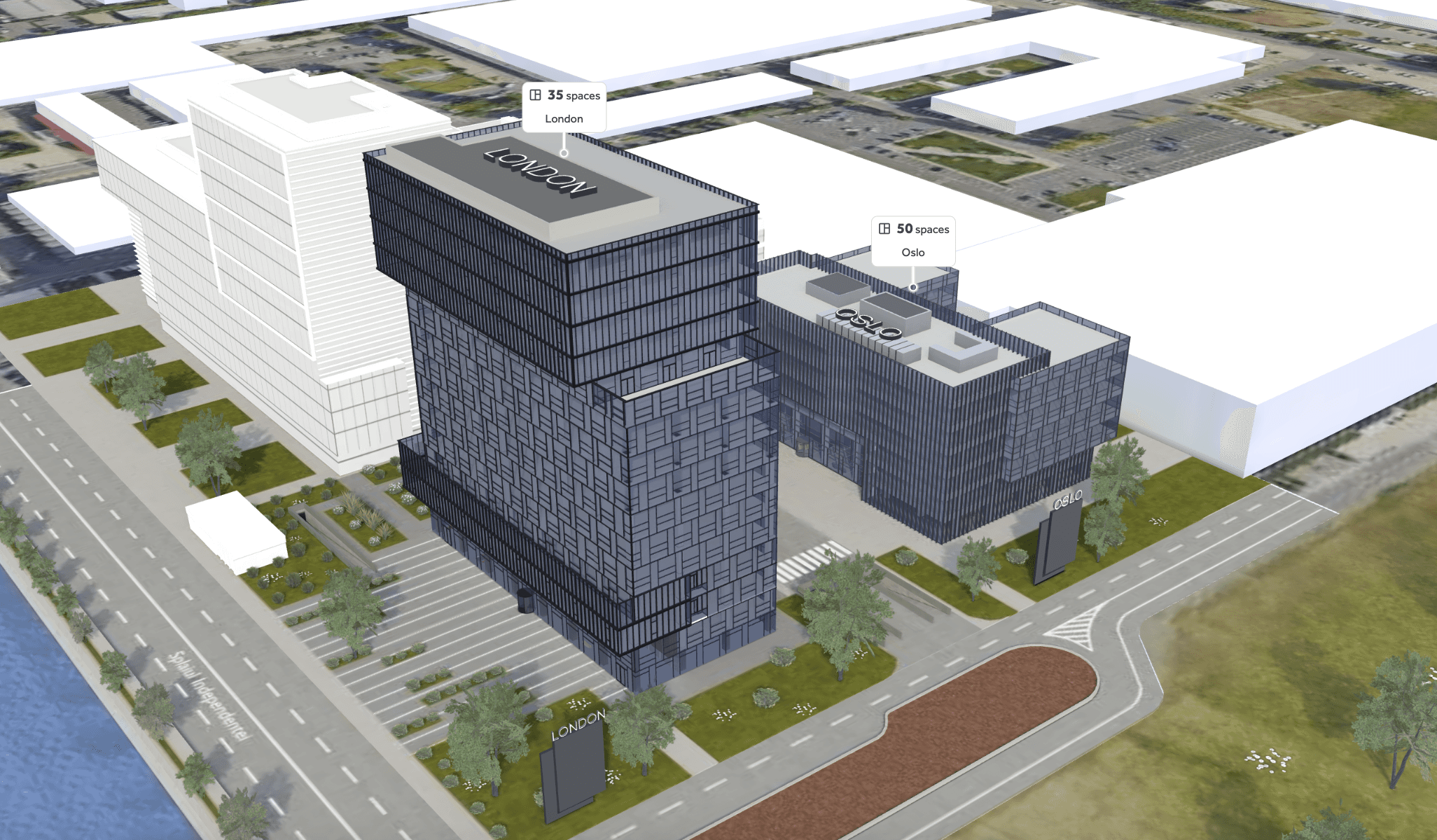
The Digital Twin helps us a lot when speaking with potential tenants who do not have a real estate background. The buildings are designed with flexible, open floorplates, and the 3D Masterplan supports tenants in visualising how a customised office space could take shape. It helps them understand positioning, layout potential, and how their future office could function.
The platform is especially valuable for international stakeholders or decision-makers who evaluate the space remotely and cannot visit the site immediately.
Do brokers use the platform as well?
We actively introduced the platform to all major agencies. As part of this process, we met with key brokerage teams to present not only the London & Oslo Office Building, but also the Bright Spaces platform and how it can make the leasing process more efficient.
The platform is positioned as an integral part of our leasing proposition, offering brokers an additional tool to support their clients by bringing clarity and confidence into the space evaluation process.
You have more than 20 custom fit-outs created through Intelligent 3D Space Planning. How do tenants react to these layouts?
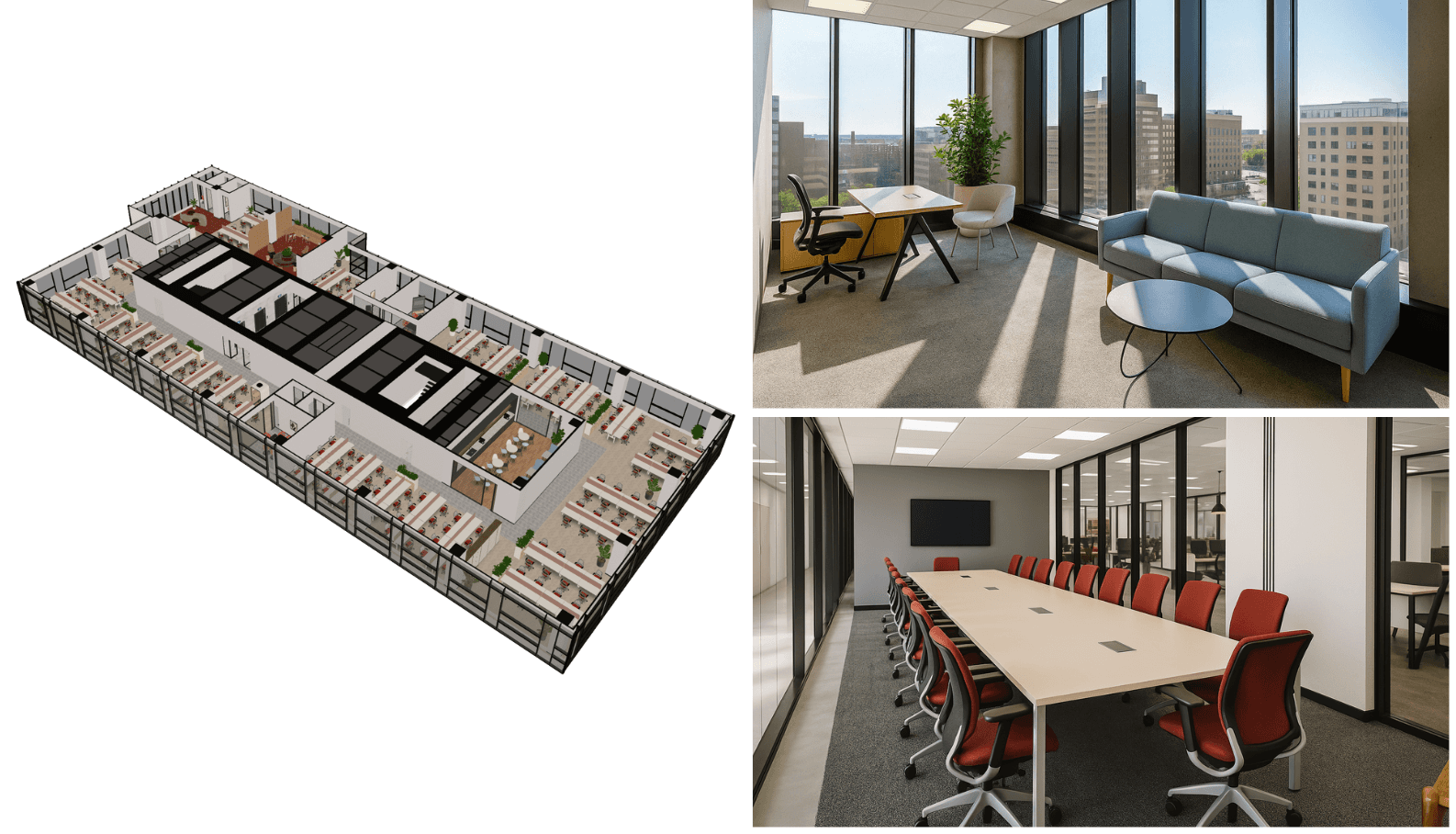
The feedback has always been very positive. The renderings are highly realistic, often perceived like real-life photos, rather than generated images. The inclusion of the actual floor view helps a lot too.
Tenants can visualize where their desk might go, where they’d place a plant or a family photo. It helps them connect emotionally with the space, which is important when you're making a long-term commitment.
How does the platform support tenants who don’t have a real estate or architectural background?
The platform simplifies the decision-making process, especially for smaller tenants, especially, who may not have a dedicated real estate specialist. Sometimes we speak directly with people from finance, HR or operations, for whom real estate is outside their area of focus.
The 3D layouts help them clearly understand the end result and feel confident that the final space will meet their needs.
Have you seen the platform make a difference in the decision-making timeline?
While final decisions are ultimately taken in Excel, based on price and numbers, the visual tools play an important role when we’re competing with two or three other buildings at the same level.
If someone is undecided between different areas or buildings, highly realistic layouts or a virtual walkthroughs, can make a meaningful difference in the evaluation process.
Are there specific deals where the platform played a clear role?
Yes. We have several recent deals, some already announced, others not public yet, where Bright Spaces played an important role. While specific details cannot be disclosed, the platform’s contribution to supporting these decisions has been significant.
We offer these layouts to all tenants, regardless of how many square meters they need. Everyone gets the same experience.
How would you describe Bright Spaces’ turnaround time and support during the leasing process?
The platform has evolved significantly over the past year. For instance, the ability to deliver complex layouts even within 24 hours is crucial for us.
In leasing, when interest is high, you need to strike immediately. If I present the building today and the client is excited, I need to send them a visual tomorrow, not next week. Fast turnaround helps keep momentum.
Even in situations where full 2D documentation was not available, high-quality outputs were delivered, reflecting a strong understanding of the operational realities of the leasing process.
How has hybrid work influenced your strategy, and how do the 3D layouts support this shift?
The company’s structure and short decision-making chain allow for quick adaptation to market dynamics. We follow market trends and even look at major European cities to anticipate how tenant expectations are evolving.
Hybrid work changed what people expect from an office. Now, they are looking for collaboration areas, phone booths, multifunctional spaces and amenities around the office, to complete the full experience.
The 3D visuals help us show this vision clearly and to understand how these concepts translate into real, functional spaces.
Looking back, how do you feel technology has changed the leasing process?
As the market has evolved, tenant expectations have become more sophisticated, and technology has become essential. Today, success depends on anticipating what tenants will need two to five years ahead, not only responding to current requirements.
Technologies such as AI, BMS systems or sensor-based optimization, all these are fully integrated into daily operations. For us, technology is no longer optional. It’s part of how we deliver a modern office experience.
Final question — how would you describe the collaboration with Bright Spaces?
We make a very good team. Everything is delivered fast, accurately, and with a deep understanding of how we work. For us, Bright Spaces is a strategic partner rather than a simple digital tool.
———————
To learn more about the collaboration between Bright Spaces and EVO Properties, you can download the full case study from our Resources page.
As the office market continues to evolve, developers and landlords are increasingly turning to technology to create clarity, reduce friction, and support tenants in making faster, more confident leasing decisions. EVO Properties, the owner of the Class A+ Oslo and London office buildings in Bucharest, is among the companies embracing this shift.
We sat down with Anamaria Cretu, EVO Properties’ Leasing and Asset Director, to discuss their experience using Bright Spaces’ 3D Masterplan and Intelligent 3D Space Planning solutions, how tenant expectations have changed, and what it takes to differentiate in a competitive leasing market.
What were the initial leasing challenges you were dealing with when you joined the EVO Properties team?
When I joined the team, the main challenge wasn’t the buildings themselves, which are modern, high-quality assets, but rather the perception of the area at that time. Last year, one of our priorities was to clearly articulate the potential of the area and the long-term vision behind the London and Oslo office buildings.
At the same time, many prospective tenants were approaching the leasing process without a real estate background. They were looking for clarity, guidance, and visual tools that could help them better understand how their future office space could take shape.
Why did you decide to work with Bright Spaces?
We chose to work with Bright Spaces because we believe it adds real value to our leasing strategy. From experience, I knew how effective this type of visual support can be in helping tenants better understand a space by providing clarity and structure throughout the leasing process.
The collaboration is reviewed annually, and this is a conscious decision, based on impact and results, rather than routine.
How does the 3D Masterplan help you in day-to-day leasing conversations?
The Digital Twin helps us a lot when speaking with potential tenants who do not have a real estate background. The buildings are designed with flexible, open floorplates, and the 3D Masterplan supports tenants in visualising how a customised office space could take shape. It helps them understand positioning, layout potential, and how their future office could function.
The platform is especially valuable for international stakeholders or decision-makers who evaluate the space remotely and cannot visit the site immediately.
Do brokers use the platform as well?
We actively introduced the platform to all major agencies. As part of this process, we met with key brokerage teams to present not only the London & Oslo Office Building, but also the Bright Spaces platform and how it can make the leasing process more efficient.
The platform is positioned as an integral part of our leasing proposition, offering brokers an additional tool to support their clients by bringing clarity and confidence into the space evaluation process.
You have more than 20 custom fit-outs created through Intelligent 3D Space Planning. How do tenants react to these layouts?
The feedback has always been very positive. The renderings are highly realistic, often perceived like real-life photos, rather than generated images. The inclusion of the actual floor view helps a lot too.
Tenants can visualize where their desk might go, where they’d place a plant or a family photo. It helps them connect emotionally with the space, which is important when you're making a long-term commitment.
How does the platform support tenants who don’t have a real estate or architectural background?
The platform simplifies the decision-making process, especially for smaller tenants, especially, who may not have a dedicated real estate specialist. Sometimes we speak directly with people from finance, HR or operations, for whom real estate is outside their area of focus.
The 3D layouts help them clearly understand the end result and feel confident that the final space will meet their needs.
Have you seen the platform make a difference in the decision-making timeline?
While final decisions are ultimately taken in Excel, based on price and numbers, the visual tools play an important role when we’re competing with two or three other buildings at the same level.
If someone is undecided between different areas or buildings, highly realistic layouts or a virtual walkthroughs, can make a meaningful difference in the evaluation process.
Are there specific deals where the platform played a clear role?
Yes. We have several recent deals, some already announced, others not public yet, where Bright Spaces played an important role. While specific details cannot be disclosed, the platform’s contribution to supporting these decisions has been significant.
We offer these layouts to all tenants, regardless of how many square meters they need. Everyone gets the same experience.
How would you describe Bright Spaces’ turnaround time and support during the leasing process?
The platform has evolved significantly over the past year. For instance, the ability to deliver complex layouts even within 24 hours is crucial for us.
In leasing, when interest is high, you need to strike immediately. If I present the building today and the client is excited, I need to send them a visual tomorrow, not next week. Fast turnaround helps keep momentum.
Even in situations where full 2D documentation was not available, high-quality outputs were delivered, reflecting a strong understanding of the operational realities of the leasing process.
How has hybrid work influenced your strategy, and how do the 3D layouts support this shift?
The company’s structure and short decision-making chain allow for quick adaptation to market dynamics. We follow market trends and even look at major European cities to anticipate how tenant expectations are evolving.
Hybrid work changed what people expect from an office. Now, they are looking for collaboration areas, phone booths, multifunctional spaces and amenities around the office, to complete the full experience.
The 3D visuals help us show this vision clearly and to understand how these concepts translate into real, functional spaces.
Looking back, how do you feel technology has changed the leasing process?
As the market has evolved, tenant expectations have become more sophisticated, and technology has become essential. Today, success depends on anticipating what tenants will need two to five years ahead, not only responding to current requirements.
Technologies such as AI, BMS systems or sensor-based optimization, all these are fully integrated into daily operations. For us, technology is no longer optional. It’s part of how we deliver a modern office experience.
Final question — how would you describe the collaboration with Bright Spaces?
We make a very good team. Everything is delivered fast, accurately, and with a deep understanding of how we work. For us, Bright Spaces is a strategic partner rather than a simple digital tool.
———————
To learn more about the collaboration between Bright Spaces and EVO Properties, you can download the full case study from our Resources page.
Product
© 2026 Bright Spaces. All rights reserved.
Product
© 2026 Bright Spaces. All rights reserved.
Product
© 2026 Bright Spaces. All rights reserved.